
Solution guides
How to Evaluate Segregation Level with GranuPack?
This article presents a simple method for evaluating segregation in powder blends using the GranuPack.
Introduction
Powder segregation is one of the most common challenges encountered when handling granular materials. When a powder blend is subjected to vibrations, tapping, conveying, or other mechanical solicitations, its different components may separate according to their size, density, or shape.
This phenomenon can have significant consequences in many industries. In pharmaceutical manufacturing, segregation may lead to dosage variability. In chemical processes, local composition changes may affect safety or product quality. In powder processing, segregation can also modify flowability, packing behavior, and downstream process performance.
For these reasons, quantifying the level of segregation is essential for monitoring blend stability and optimizing formulations.
Why Measure Powder Segregation?
A homogeneous blend contains all its components uniformly distributed throughout the material. When segregation occurs:
- Particle concentration varies from one location to another.
- Blend homogeneity decreases.
- Product consistency is reduced.
- Processability may change.
The ability to quantify segregation helps users:
- Compare formulations.
- Evaluate process stability.
- Monitor blend quality.
- Assess the performance of anti-segregation strategies.
The GranuPack provides a practical approach by comparing the measured tapped density of a blend with the theoretical density expected for a fully segregated material.
The Principle Behind the Method
The protocol is based on a simple concept. When a binary blend becomes fully segregated, each component forms a separate monodisperse phase. Each phase exhibits its own characteristic tapped bulk density. Knowing the tapped density of each pure component makes it possible to calculate the theoretical tapped density of a fully segregated blend, denoted: ρ*
The actual tapped density of the blend, measured with the GranuPack after 500 taps, can then be compared with this theoretical value.
The closer the measured density is to ρ*, the more segregated the blend is likely to be.
Determining the Reference Densities
The first step consists of measuring the tapped bulk density of each pure component separately. These measurements are performed using standard GranuPack conditions:
- 500 taps
- 1 Hz tapping frequency
- 1 mm free-fall distance
The resulting tapped densities are:
- ρ₁(500)
- ρ₂(500)
If pure materials are unavailable, the blend can be sieved to isolate sufficient quantities of each particle population for independent measurements.
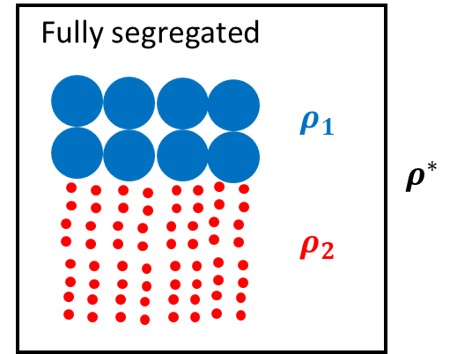
Figure 1: Picture of a fully segregated blend.
Calculating the Density of a Fully Segregated Blend
Once the properties of the individual components are known, the theoretical density of a fully segregated blend can be calculated.
If the volume fractions are known:
ρ* = f₁ᵛρ₁ + f₂ᵛρ₂
If the mass fractions are known:
ρ* = 1 / (f₁ᵐ/ρ₁ + f₂ᵐ/ρ₂)
where:
- fᵛ represents volume fractions.
- fᵐ represents mass fractions.
- ρ₁ and ρ₂ are the tapped densities of the individual species.
This theoretical density serves as a reference corresponding to complete segregation.
Measuring the Segregation Index
After defining the theoretical density, a GranuPack measurement is performed on the blend itself.
The tapped density of the blend after 500 taps is noted:
ρ(500)
The Segregation Index (SI) is then calculated as:
SI = 1 / (ρ − ρ*)
This metric provides a quantitative assessment of segregation.
As the blend becomes increasingly segregated, its measured density approaches the theoretical density of the fully segregated state, causing the Segregation Index to increase.
Understanding the Segregation Index
Figure 2 illustrates the evolution of the Segregation Index with increasing segregation. The interpretation is straightforward:
- Low SI values indicate limited segregation and a relatively homogeneous blend.
- High SI values indicate significant segregation.
- Very high SI values suggest that the blend approaches the fully segregated state represented by ρ*.
The Segregation Index therefore provides a practical and quantitative method for comparing blend stability.
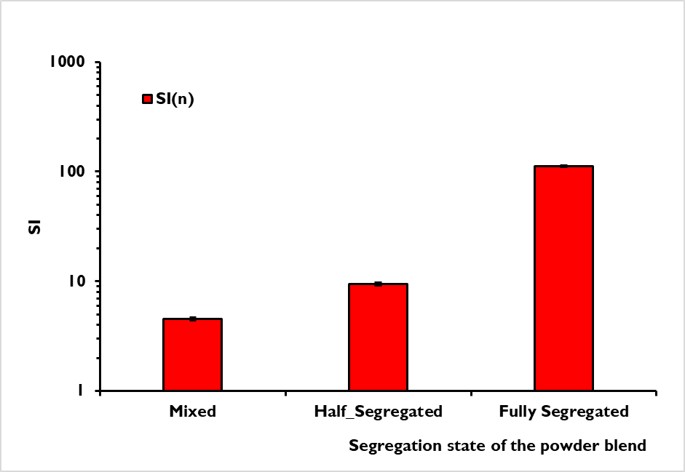
Figure 2: Increase of the SI with the level of segregation.
Extending the Method to Complex Blends
Although the protocol is presented for binary mixtures, it can be extended to blends containing more than two components. In this case, the theoretical density calculation is adapted by including the tapped density and proportion of each individual species. The Segregation Index remains based on the comparison between:
- The measured density of the blend.
- The calculated density corresponding to the fully segregated state.
This makes the method applicable to many industrial formulations.
Industrial Applications
Segregation measurements are particularly useful for:
- Pharmaceutical formulations
- Food ingredient blends
- Battery materials
- Powder metallurgy
- Additive manufacturing feedstocks
- Specialty chemicals
The method helps evaluate whether a formulation remains homogeneous during storage, transport, or processing.
Conclusion
The GranuPack provides a simple and quantitative method for assessing segregation in powder blends.
By comparing the measured tapped density of a blend with the theoretical density of a fully segregated material, users can calculate the Segregation Index (SI) and quantify blend stability.
The larger the Segregation Index, the closer the material is to a segregated state. Because the method only requires knowledge of the proportions and tapped densities of the individual species, it offers a practical solution for monitoring segregation in a wide range of powder systems.
FAQ – Evaluating Segregation with GranuPack
What is powder segregation?
Powder segregation is the separation of different particle populations within a blend, leading to composition variations and reduced homogeneity.
Why is segregation a concern in powder processing?
Segregation can cause inconsistent formulations, dosage variability, quality issues, and changes in flowability or process performance.
What does the Segregation Index (SI) represent?
The Segregation Index quantifies the proximity of a blend to a fully segregated state based on tapped density measurements.
What does a high Segregation Index indicate?
A high Segregation Index indicates that the measured density is close to the theoretical density of a fully segregated blend, suggesting significant segregation.
Can this method be used for blends containing more than two components?
Yes. The theoretical density calculation can be extended to multi-component blends by accounting for the proportions and tapped densities of each species.