

Application notes
How to determine the optimal Carbon Black proportion for electrode production with GranuPack Conductivity
Powder conductivity varies from bulk materials due to particle surfaces and packing. It helps detect oxidation, moisture, and formulation changes. Measuring it across packing states is key to ensuring quality and optimizing performance in industries like batteries, pharma, and AM.
 (1200 x 800 px).png)
How to determine the optimal Carbon Black proportion for electrode production with GranuPack Conductivity
1. Introduction
The electric conductivity of an electrode is a key factor for the performance of a battery. Indeed, a large conductivity is needed to have a large power density of the battery and also to allow the active material to exchange electrons easily with the ions during the charge or discharge of the battery. Nevertheless, this conductivity is a challenging aspect to optimize in the electrode. Indeed, the active material is generally a poor conductor. Therefore, a conductive additive, generally carbon black, is added to increase the conductivity and make the charge exchange possible. The counterpart is that the more carbon black is added, the less active material there is. Therefore, there is a compromise between the quantity of active material in the electrode, directly influencing the capacity of the battery, and the quantity of carbon black, directly controlling the conductivity of the blend.
The increase in conductivity with carbon black proportion is not linear. At low concentrations of carbon black, the increase in conductivity is slow with the mass proportion of carbon black. The reason is that at low concentration, there are not enough particles of conductive additive to create an effective conductive path. When the concentration increases until a certain level, called the electric percolation threshold, the carbon black particles start to generate a conductive network between the particles of active material, and an electron can easily find a way from the active material to the electrode. The more carbon black you add, the more pathways you create, thus facilitating the current conduction. This increase in conductivity with carbon black concentration is then fast and can vary by several orders of magnitude for an increase of one order of magnitude in the concentration of carbon black. Then, adding carbon black until a certain point does not increase a lot the conductivity which saturates. Indeed, after a certain concentration, the particles of conductive additive are just saturating the blend and no supplementary pathway is created.
Although this evolution in conductivity with carbon black proportion is known to be nonlinear and partially understood, predicting this evolution and the threshold of electric percolation is still complex. From a practical point of view, the useful information to know for blend formulation is the carbon black proportion at which the conductivity saturates. Indeed, this proportion corresponds to the lowest proportion of carbon black that can be added to active material before a significant reduction in conductivity if this proportion is decreased. Since this quantity cannot be predicted, it is necessary to measure the conductivity of the powder material to find the optimal proportion. In this work, we show how the optimal proportion can be determined by using the GranuPack Conductivity.
2. Material and Methods
2.1. Materials
For this study, blends of glass beads (100-200 µm) and carbon black (Black Monarch) were used as model materials to investigate the evolution of conductivity with mass percentage of carbon black. Five blends of respectively 0%, 0.01%, 0.1%, 0.5% and 1% of carbon black in mass were prepared (see Figure 1. The glass beads were mixed with the carbon black for 10 min at 50 rpm in a V-blender.
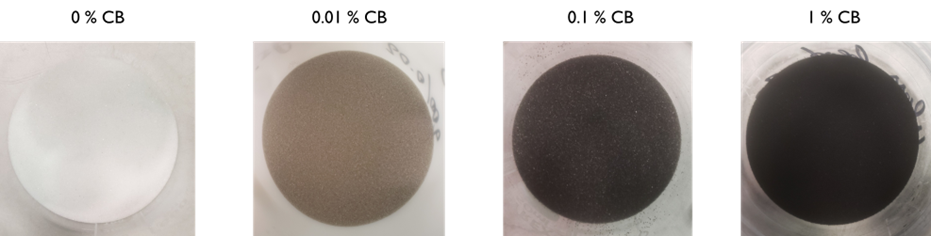
Figure 1: Pictures of the different blends.
Once the powders were prepared, they were tested in the GranuPack Conductivity, presented in Figure 2. After the regular initialization protocol of the GranuPack, the powder is densified by performing a succession of free falls, called taps. The bulk density and the conductivity are measured and recorded at the same time after each tap, giving access to the evolution of powder conductivity as a function of the tapped density. For the characterization, 500 taps were performed at 1Hz and 1 mm of free fall.
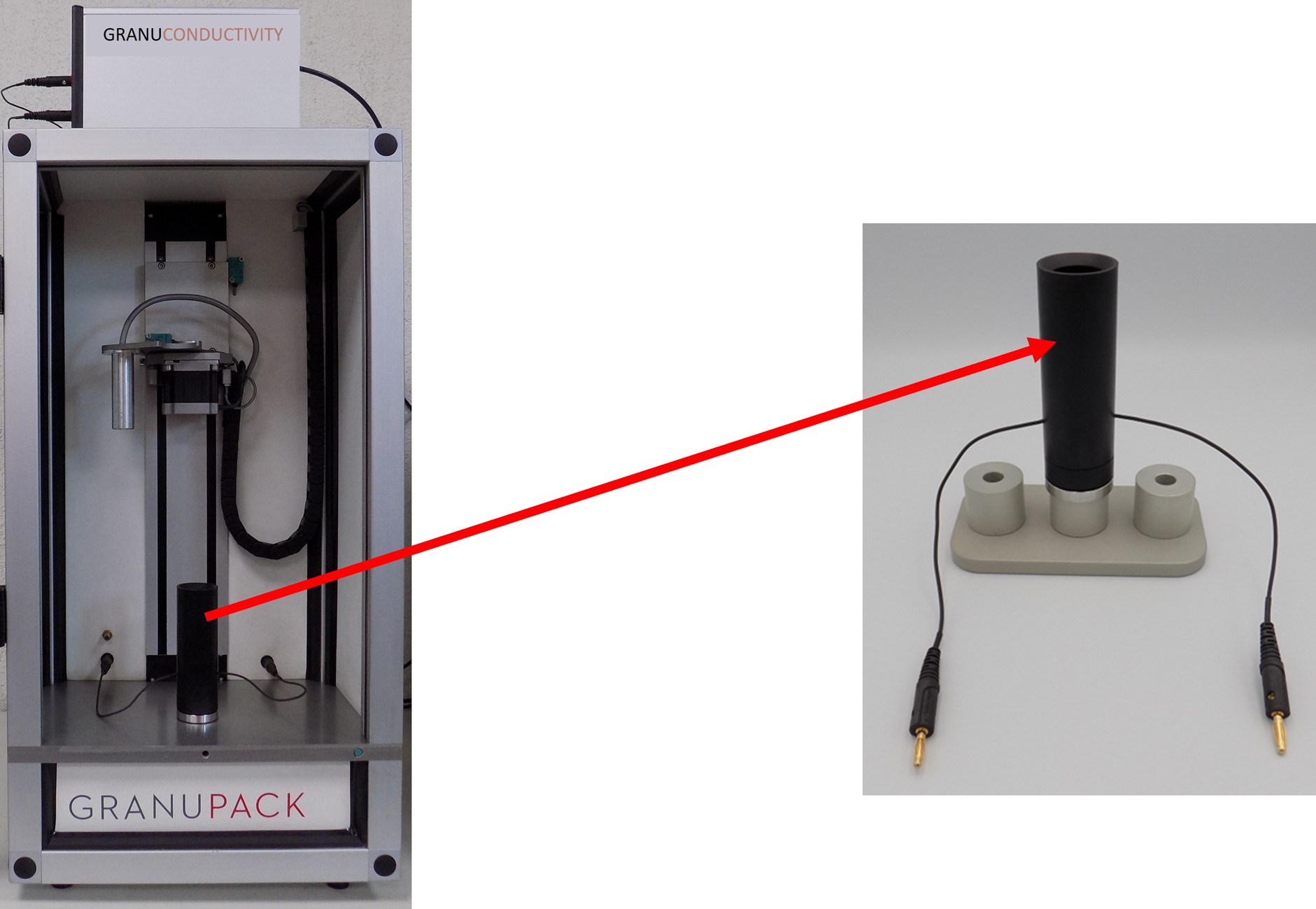
Figure 2: (left) GranuPack with the conductivity unit. (right) conductivity cell.
3. Results and discussion
In Figure 3, the curves of the evolution of conductivity as a function of the normalized packing fraction 𝜂∗=𝜌−𝜌(0)𝜌(500)−𝜌(0) are presented. While no significant difference is seen in conductivity between 0% and 0.01% of carbon black, an increase of one order of magnitude is observed with 0.1% of carbon black. Nevertheless, the sharpest increase in conductivity is between 0.1% and 5% of carbon black, for which the conductivity increases by at least three orders of magnitude. Then, the increase in conductivity slows down between 0.5% and 1% of carbon black.
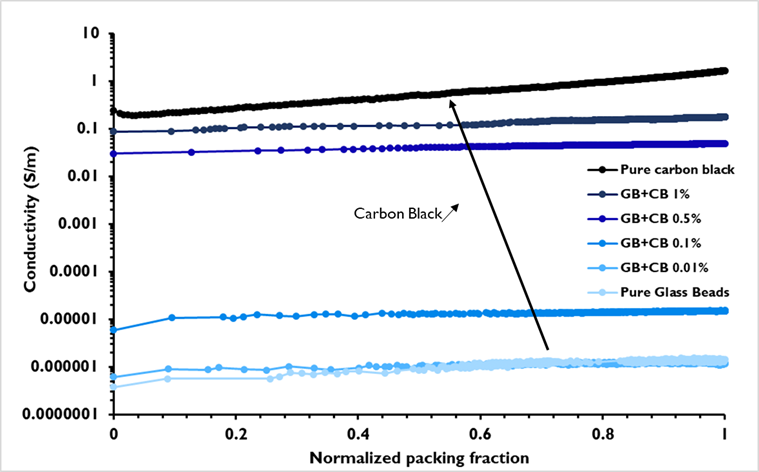
Figure 3: Evolution of conductivity with tapped density for the different blends
The evolution of conductivity with normalized packing fraction is low compared to the evolution of conductivity with carbon black proportion. Therefore, for each curve, the conductivity can be averaged over the different normalized packing fractions and drawn as a function of the carbon black proportion. This is presented in Figure 4. Conductivity slowly increases at the beginning. This increase sharpens between 0.1% and 0.5% and slows down beyond 0.5%. This means that adding more than 0.5% of carbon black results in a poor increase in conductivity. On the contrary, putting less than 0.5% results in a fast decrease in conductivity.
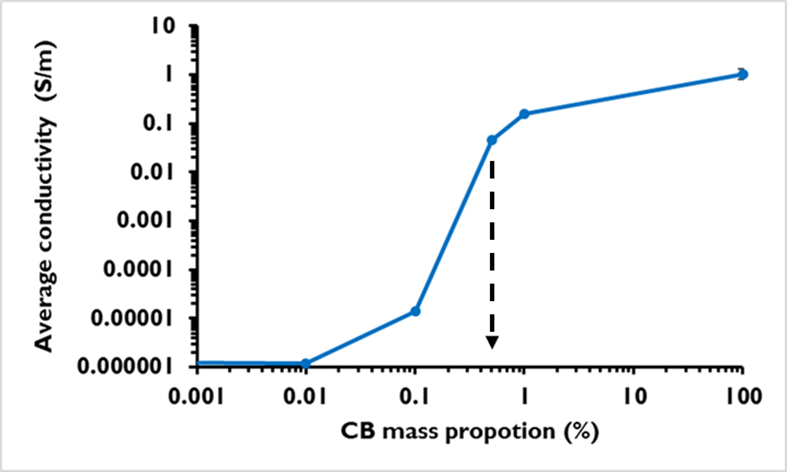
Figure 4: Evolution of the average conductivity as a function of the carbon black proportion.
For real battery powder blends, determining this transition threshold is of huge importance since the aim is to have the largest conductivity as possible but with the largest content of active material, two opposing constraints. Therefore, this threshold can help to define the minimal value of carbon black proportion (as defined by the dashed arrow), to optimize the quantity of active material and thus the capacity of the electrode, which gives a high conductivity.
Conclusion
In this work, a model material made of glass beads and carbon black was studied. The conductivity of blends, made of different proportions of carbon black was measured. The non-linear evolution of conductivity with the carbon black proportion highlights the importance of investigating this evolution for electrode powder blends and defining the optimal carbon black proportion. Indeed, below the optimal proportion, the conductivity decreases rapidly. Therefore, it is not advisable to put less carbon black. On the contrary, adding more carbon black gives less space for the active material while the conductivity is slightly increased, compromising the capacity of the battery. Consequently, using the optimal value of carbon black proportion determined with the GranuPack Conductivity gives the possibility to find the best compromise between the highest conductivity and the highest proportion of active material.
By Dr. Salvatore Pillitteri, Particle Scientist, Granutools
FAQ – Determining Optimal Carbon Black Proportion for Electrode Formulation
What is powder spreadability in metal additive manufacturing?
Which powder property best predicts spreadability?
Powder cohesiveness, quantified by the GranuDrum Cohesive Index, is a key predictor of layer homogeneity and spreadability.